


Mark Gordon
Biography
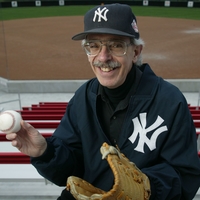
Mark Gordon is the Frances M. Craig Distinguished
Professor of
Chemistry at Iowa State University. Professor Gordon
received his PhD in 1967 under
the guidance of Professor John Pople, 1998 Chemistry Nobel Laureate. He accepted a faculty
appointment at North Dakota State University in 1970 and later
moved to Iowa State University and Ames Laboratory in 1992.
Profesor Gordon's research interests are very broadly based in electronic
structure theory, computational science and related fields,
including solvent effects and chemical reaction mechanisms. He has authored
more than 600 research papers and is an elected member of
the International Academy of Quantum Molecular Science. He received the 2009
American Chemical Society Award for Computers in Chemical and Pharmaceutical
Research and the 2015 American Chemical Society Award for Theoretical
Chemistry. He is a Fellow of the American Physical Society, the American
Chemical Society and the American Association for the Advancement of Science.
Chemistry at Iowa State University. Professor Gordon
received his PhD in 1967 under
the guidance of Professor John Pople, 1998 Chemistry Nobel Laureate. He accepted a faculty
appointment at North Dakota State University in 1970 and later
moved to Iowa State University and Ames Laboratory in 1992.
Profesor Gordon's research interests are very broadly based in electronic
structure theory, computational science and related fields,
including solvent effects and chemical reaction mechanisms. He has authored
more than 600 research papers and is an elected member of
the International Academy of Quantum Molecular Science. He received the 2009
American Chemical Society Award for Computers in Chemical and Pharmaceutical
Research and the 2015 American Chemical Society Award for Theoretical
Chemistry. He is a Fellow of the American Physical Society, the American
Chemical Society and the American Association for the Advancement of Science.
Presentations
ACM Student Research Competition
Poster
Reception

Paper
Applications
Effective Application of HPC
Scientific Computing
